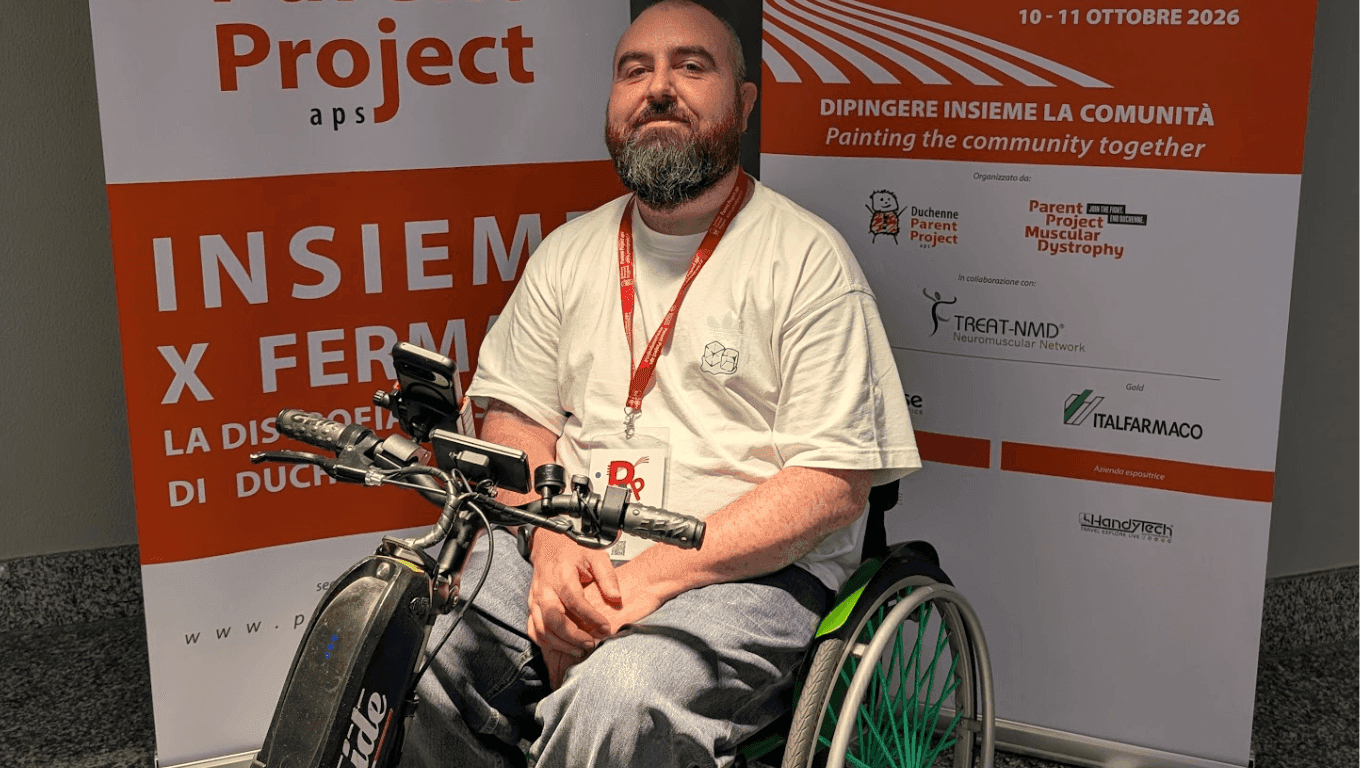
On October 11, our Community Manager Joe attended the first-ever International Conference on Becker Muscular Dystrophy. Held in Milan, Italy, this community event brought together people from across the world with the same muscle-wasting condition Joe lives with.
Joe was invited to speak about the reality of travel for disabled people.
Although his talk was at a muscular dystrophy event, the theme is universal, and we thought Euan’s Guide users might appreciate his words.
What does travelling mean for someone living with BMD?
Travelling means two things: adventure and admin.
Our photographs of exotic places show only a moment in time. They don’t show the hours we spend ensuring airlines or train companies understand our needs, which we often need to repeat several times along the way. Nor do they show the time spent checking that accommodation is suitable and researching how we’ll get around when we get there.
Sometimes it feels like it isn’t worth the effort, but it almost always is.
I’ve had the good fortune to travel to more than 14 countries, where I’ve had many wonderful experiences and made a few friends. My experiences have taught me that although travelling as a disabled person is challenging, it should never be a reason not to. And that goes for catching the bus into town just as much as boarding a 16-hour flight.
If I had one piece of advice, it would be this: be prepared. Have the information you need to hand and be prepared for things to go wrong.
If you expect something to occur, you can react to it. If not, you can be surprised that it went right.
In my experience, travel has been mostly positive. I’ve flown with many airlines that were considerate and travelled on many trains where staff have gone out of their way to ensure our comfort.
But every once in a while, something goes wrong. And every time it does, there is something new to learn.
I know the codes used by airlines to describe my mobility, meaning that if I overhear an incorrect code, I can challenge it. I know that insuring my mobility aids through my home insurance is sensible, and I’ve learned to use my voice.
Many people assume that disabled people are polite and quiet. Now, I’m certainly polite, but I’m not quiet. I will speak up for myself because I know it helps others. If I raise an issue that impacts me today, I can avoid it impacting you tomorrow.
Nobody wants to complain, and I won’t, provided you treat me and my equipment with dignity and respect. If not, I’ll make sure as many people hear about it as possible.
I’ve been left on trains because my booked assistance has failed to arrive. I deal with this by blocking the doors. Someone is going to come for me if those doors don’t close.
I’ve had mobility aids broken by baggage handlers. I breathe through the frustration, channel it into hard-hitting complaints directed at everyone involved and persist until I get the outcome I need.
But generally, support staff are good, and whether through pity or simply seeing you as just another human being, there’s usually someone waiting to help.
There is a long way to go before truly accessible travel is commonplace, but the work will never be done if we don’t travel.
So get out there, see the world and show others that we have as much right to an adventure as anyone else!