
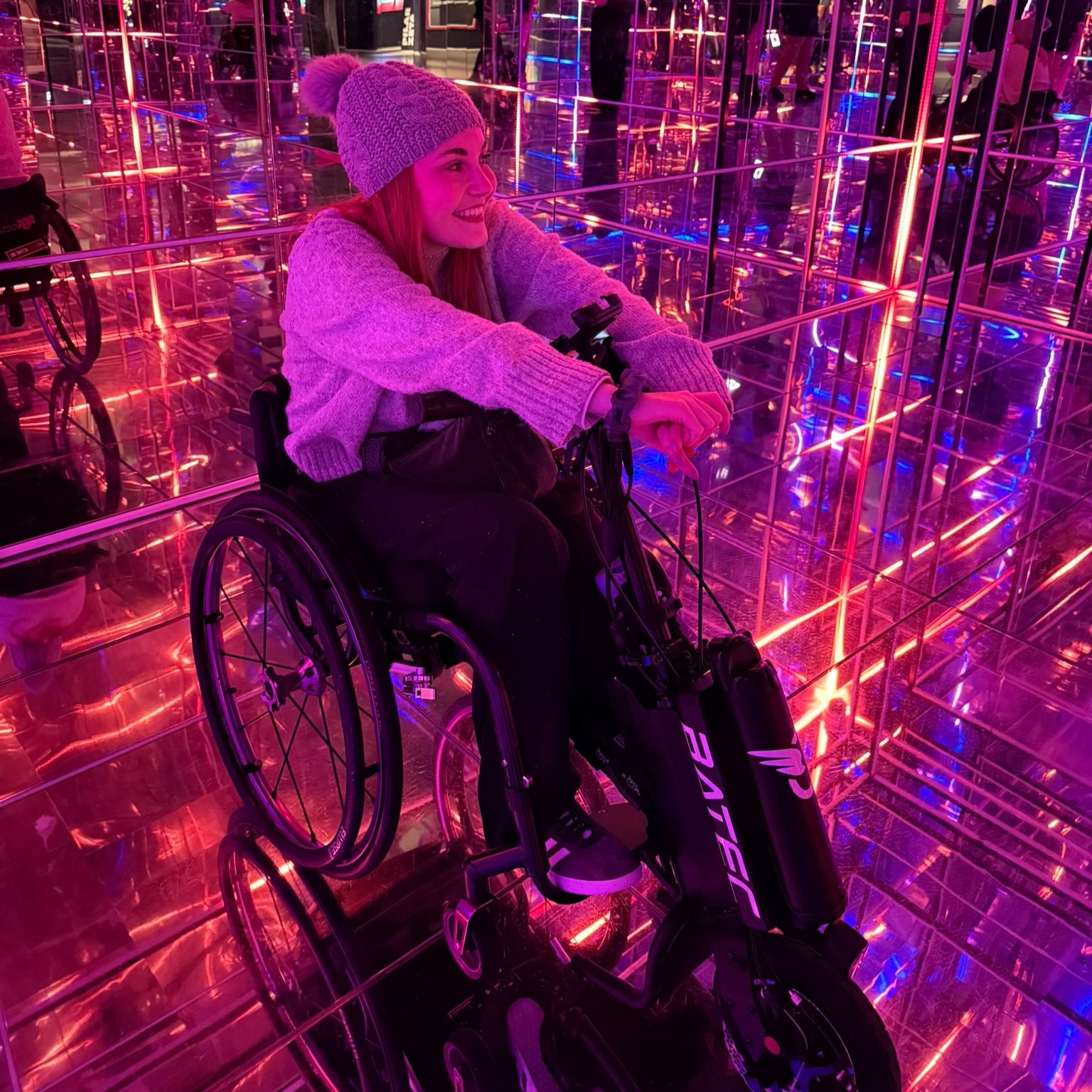
Magnificent accessibility throughout
5

5
Date of visit: November 2025
I am a disabled person. I have experience of challenges around: accessing toilets and moving around.
I use or have experience of: disabled toilet, wheelchair


Overall Rating

Excellent
This was possibly the best venue I’ve ever visited for pan-disability accessibility. And entry is completely free! There was a Changing Places toilet on the ground floor and so many accessible toilets throughout the museum that I actually lost count! The exhibits were well spaced, and there were tactile maps everywhere. Video and audio exhibits offered captions, BSL and hearing loops. There were so many tactile exhibits, as well as Braille signage. There were lots of seating options throughout including plenty with backs and armrests. None of the lighting was overly harsh and most exhibits with sound were either in a separate room or were delivered via a headset so there were no areas with excessive noise. I really was blown away by what I saw here. I’ve never seen a venue make such a conscious effort to make their space as accessible to all. This is a venue I’ll be recommending to everyone!
Disabled Access In and Around
Excellent
The main entrance has automatic sliding doors to enter and then you enter into a large atrium with toilets, a cloakroom, a buggy park, a shop and a café. There are lifts that take you to all of the floors in the building with grab rails inside. There are tactile maps at every level, and even some levels that have a tactile map for each area on that floor. The museum website says they have some wheelchairs available for hire from the information desk. They also say they welcome assistance animals. They offer relaxed sessions for people who would feel more comfortable visiting at those times, but they do highlight the museum is accessible to all at any time. They offer “Quiet Hours” on Sundays 10am-12pm where they make the museum's light and sound levels lower. They can also offer ear defenders, pop-up tents and quiet rooms for those that need them. There is also a prayer room available. Throughout the museum I saw so many accessibility aids including: - Hearing loops at any audio exhibits - Captions and BSL at any video exhibits - Different types of seating - Tactile maps - Braille information signs - Tactile exhibits It really felt and seemed like making the museum accessible to all had been made a top priority and you could really see it and feel it as you went around.
Accessible facilities: Lift to all areas, Step-free entrance, Seating at regular intervals, Step-free access to most areas
Parking & Transport
Excellent
I travelled to this place by walk or wheel
The museum website says they have six accessible parking spaces that are just outside the museum. These bays must be pre-booked by emailing them and they recommend doing this at least three days before your visit. The closest parking facilities are in the Q-Park Liverpool ONE car park. This offers a large number of parking spaces, including accessible parking spaces and EV charging bays. This is a paid car park. There are also parking facilities at Royal Albert Dock which is just a short walk away. These car parks have some accessible parking spaces. These car parks are also paid car parks. There are some bus stops on the other side of Royal Albert Dock. The Salthouse Quay bus stop has the buses 4, 4A, and MMT stop there. The Liverpool ONE bus station is around 650 metres away from the museum and has a large number of buses and coaches available. James Street Metro Station is around 350 metres from the museum and provides access to the Wirral line. Liverpool Lime Street Station is about 1.4 kilometres from the museum and there are some inclines along the route. You can also get the metro from Liverpool Lime Street to James Street which is closer and has a flatter route to the museum.
Accessible facilities: Dedicated on-site parking, Public or on street parking
Accessible Toilets
Excellent
There were so many accessible toilets throughout the museum that I really did lose count. They were all marked with wheelchair symbols and some were also marked as “gender neutral” toilets as well to ensure everyone was comfortable using them. Some of the toilets were smaller than others and had a limited amount of transfer space but there were also some that were really large with plenty of transfer area. There were a mixture of left- and right-side transfer toilets throughout the building. Generally speaking, the accessible toilets all had fairly light doors which opened outwards. They usually had a grab rail on the inside of the door and many had one on the outside too. The locks were usually a fairly small twist lock but they often didn’t have too much resistance to them. The toilets themselves all seemed to have a cushioned backrest with grab rails on either side, including a height-adjustable grab rail. The flushes were usually handles mounted to the wall behind the toilet, on the same side as the transfer area. The sinks all seemed to have manual taps and soap dispensers and an automatic hand dryer. Some also had paper towel dispensers. The red cords were all hanging freely to the floor in all of the toilets that I saw. Some of the larger accessible toilets also had baby-changing tables in them. The Changing Places toilet was on the ground floor, by the main entrance. It required a RADAR key to get into it. It was a bit on the small side compared to some of the Changing Places toilets I have seen. But it still had the important equipment. There was a height-adjustable bench which was located just behind a privacy screen which was folded up and could be folded out to give more privacy. At one end of the bench were shower facilities as well. The bench also had a safety rail on the outside edge. There was also a ceiling hoist available. There were some laminated sheets on top of the paper roll dispenser for the bench which had instructions about how to safely operate the bench and hoist. There wasn’t any paper in the dispenser. The toilet was a Closomat toilet with height-adjustable grab rails on either side and elbow buttons on either side. There was transfer space on either side of the toilet, however, the space for a right-side transfer was slightly obstructed by some bins. There were elbow buttons on either side to trigger the flush, and wash and dry system. There were signs behind the toilet about how to operate it and there was a sticker on the wall on the left-hand side as you were sitting on the toilet which also gave brief instructions on how to use it. The sink had a lever on the right which suggested it was height-adjustable but it didn’t work and the museum’s website states this sink is at a fixed height. There was a vertical grab rail on either side of the sink and a large mirror above it. On the right was a manual soap dispenser. There was an automatic hand dryer and a paper towel dispenser in a small alcove opposite the toilet. There was a full-length mirror opposite the toilet, just next to the door. A red emergency cord hung freely next to the toilet.
Facilities: Closomat toilet, Accessible toilet, Changing Places toilet, Changing Places toilet with shower
Staff
I didn’t interact with any staff at the museum but there were some at the information desk and some in the shop.
Browse nearby places

Open Eye Gallery
0.18 km

The Beatles Statue
0.22 km
Tate Liverpool
0.22 km

Maritime Museum
0.23 km
International Slavery Museum
0.24 km
British Music Experience
0.26 km
Royal Albert Dock
0.29 km

30 James Street Home of the Titanic
0.31 km
Travelodge Liverpool Central The Strand
0.31 km
Days Inn Liverpool City Centre
0.34 km
Browse nearby places
Open Eye Gallery
0.18 km
The Beatles Statue
0.22 km
Tate Liverpool
0.22 km
Maritime Museum
0.23 km
International Slavery Museum
0.24 km
British Music Experience
0.26 km
Royal Albert Dock
0.29 km
30 James Street Home of the Titanic
0.31 km
Travelodge Liverpool Central The Strand
0.31 km
Days Inn Liverpool City Centre
0.34 km